Frontier work · decodes in progress
Reading signals nobody has read yet
Five downlinks we are actively pulling apart from this station. Each one reached a point where the public tooling stops, and the rest had to come from the bytes themselves. This is the working face, not a finished archive. Each card opens its own decode.
-
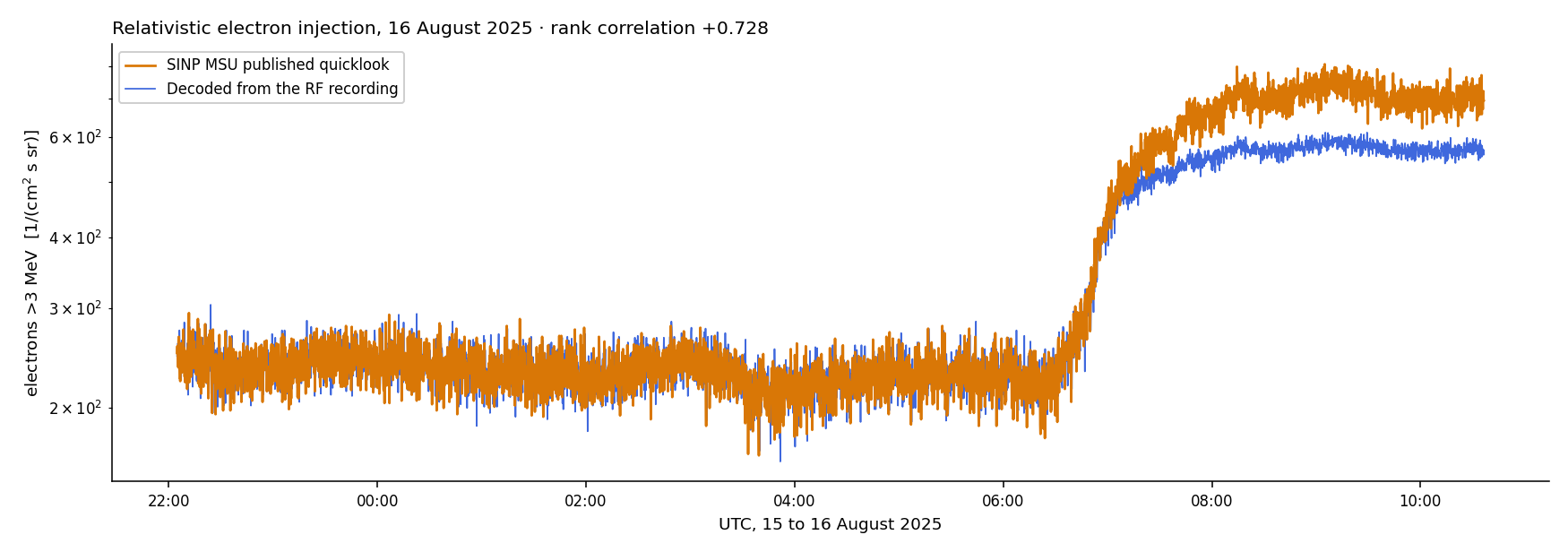
Reading a weather satellite's radiation monitor
Elektro-L2 · 1693 MHz
Published
A byte-level decode of Russia's GGAK-E space-weather telemetry, validated channel by channel against the published SINP data.
Read the decode → -
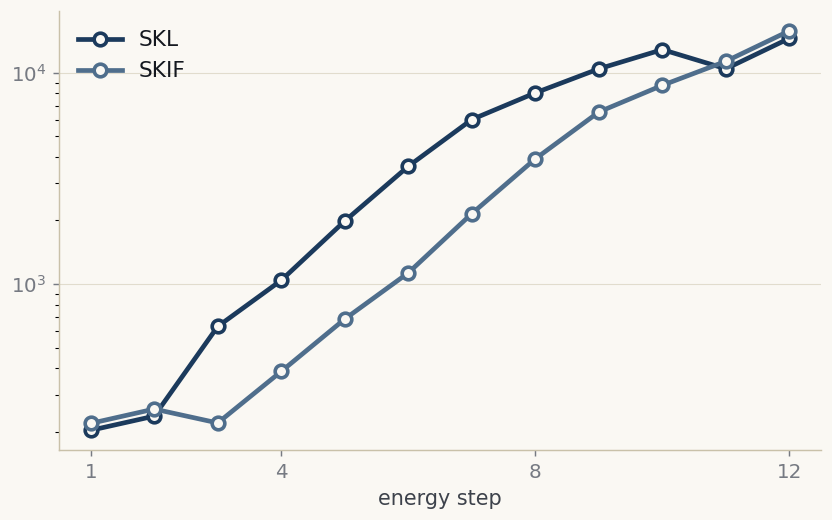
The first one we caught ourselves
Elektro-L5 · 1693 MHz
Published
The L2 work read someone else's recording. This time we received the sibling satellite on our own dish, decoded it twice over on independent chains, and read through to the instruments inside: both particle detectors' energy-sweep spectra, off our own antenna.
Read the decode → -
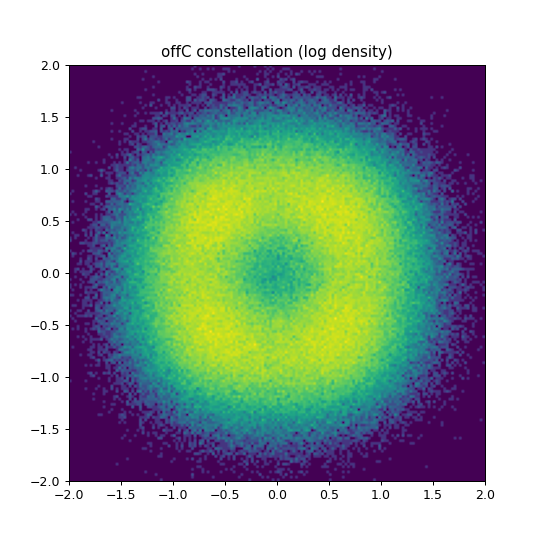
A Chinese geo downlink, measured from scratch
FengYun-4A · 1697 MHz
Published
Built from the air after the bird switched its symbol rate and the public tools stopped locking it. We measured the real waveform and proved the decoder on a reference recording. The wall now is signal strength, not the code: the 60 cm dish is too small to pull the image.
Read the decode → -
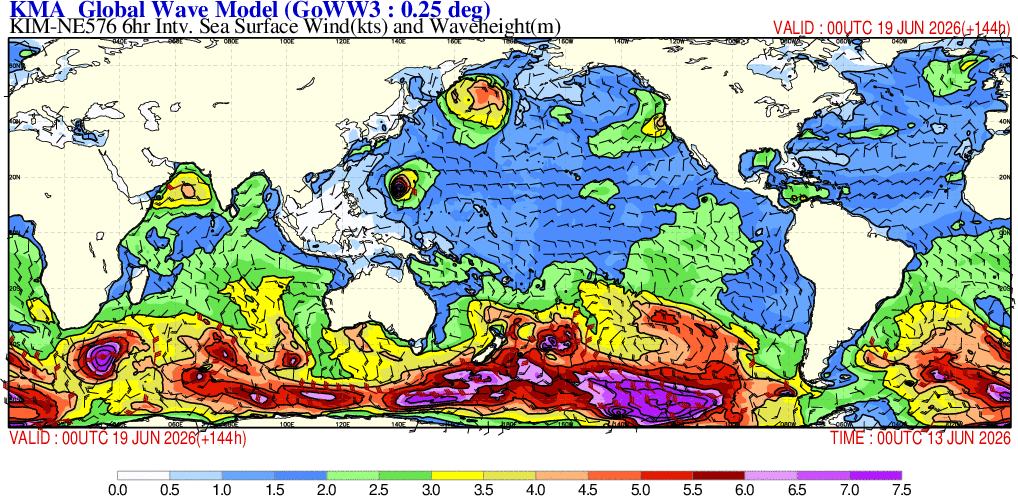
An undocumented weather-chart channel
GEO-KOMPSAT-2A · 1692 MHz
Published
The Korean LRIT downlink carries a second data channel of KMA charts alongside the imagery. Decoded from one overnight recording, with the daily operation plan in plain text.
Read the decode → -
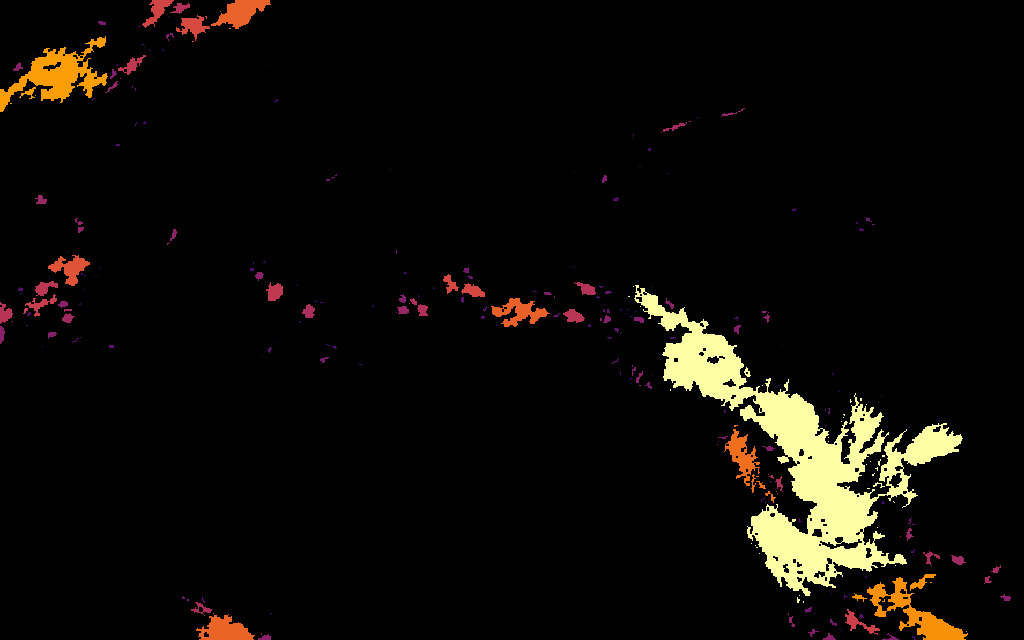
Storm clouds with no typical size
GEO-KOMPSAT-2A · 10.3 micron
Published
From one thermal-infrared band, decoded here, tropical storm clouds over the Pacific warm pool show no characteristic size: a power-law temperature spectrum and a power-law cluster-size distribution, both steady for hours and reproducing across days.
Read the decode →