FengYun-4A · 1697 MHz · China
Published · Updated
A signal that moved
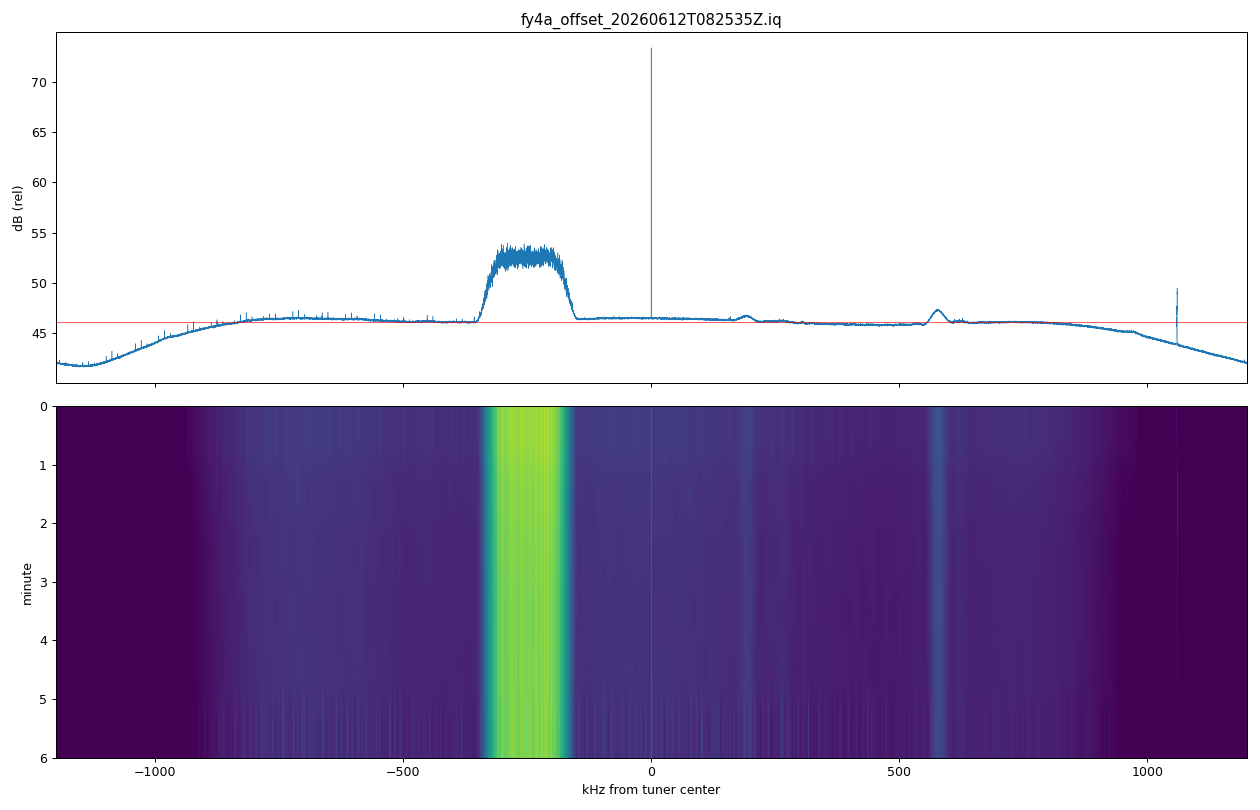
FengYun-4A is a Chinese weather satellite. Hobbyists decoded its image downlink back in 2023. Pointed at it from Mumbai, nothing worked. The satellite had quietly changed how it transmits, and every public tool was still set for the old way. So we measured the new signal from the radio up.
What we found that is not published anywhere
- It transmits at 150,000 symbols per second, not the 90,000 every public tool still assumes.
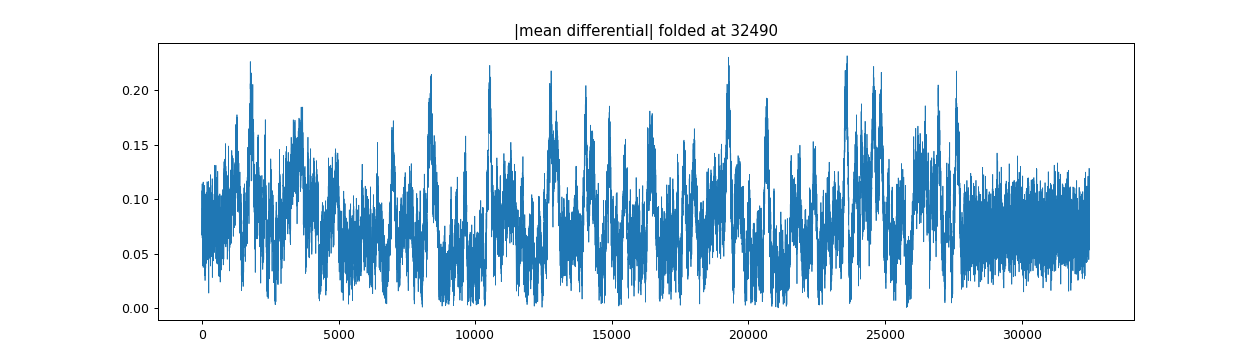
- Underneath, it is ordinary DVB-S2 (QPSK, rate 5/6). Once locked at the right rate, every frame header passes its built-in checksum. An earlier idea that it used a custom sync word turned out to be an artifact of locking onto noise, not a real feature.
- So the downlink was re-tuned after 2023, not rebuilt. The public tools fail only because they are still set for the old symbol rate.
Where it stands
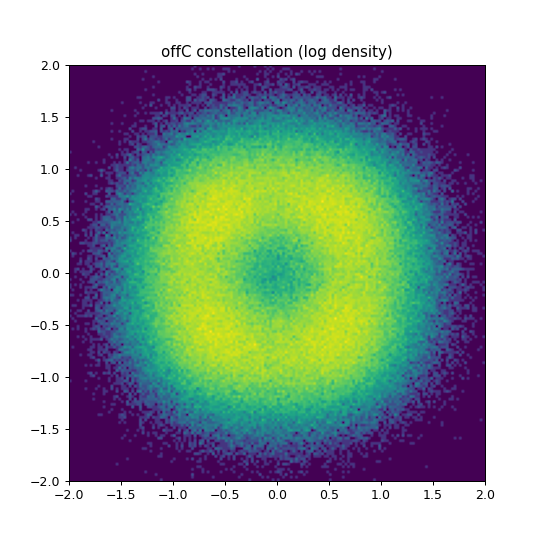
The signal is fully measured and the decoder works. We proved it end to end on a clean public reference recording of the same satellite, where it reads every frame correctly. On our own capture it does not produce an image, and the reason is strength, not the code: a 60 cm dish leaves the signal a couple of decibels under what the error-correction needs, so the frames arrive too corrupted to recover and what does come through looks like the idle carrier. The fix is aperture, not cleverness. The bird is FengYun-4A, whose downlink is linearly polarised, so the permanent Lucknow 1 m dish with a linear feed is the upgrade that should close the gap.
Capture: this station, 60 cm dish, Mumbai, June 2026. Decode: built from scratch for this project. The 2023 community archive (sat-archive.metislair.com) was used only to confirm the downlink changed.