Elektro-L2 · 1693 MHz · Russia
Published · Updated
Reading a satellite's radiation monitor
Elektro is a Russian weather satellite. Besides cameras it carries a sensor that counts electrons and protons in space and beams the readings down continuously. Nobody had published what those bytes mean. We worked it out from the raw radio.
What we did
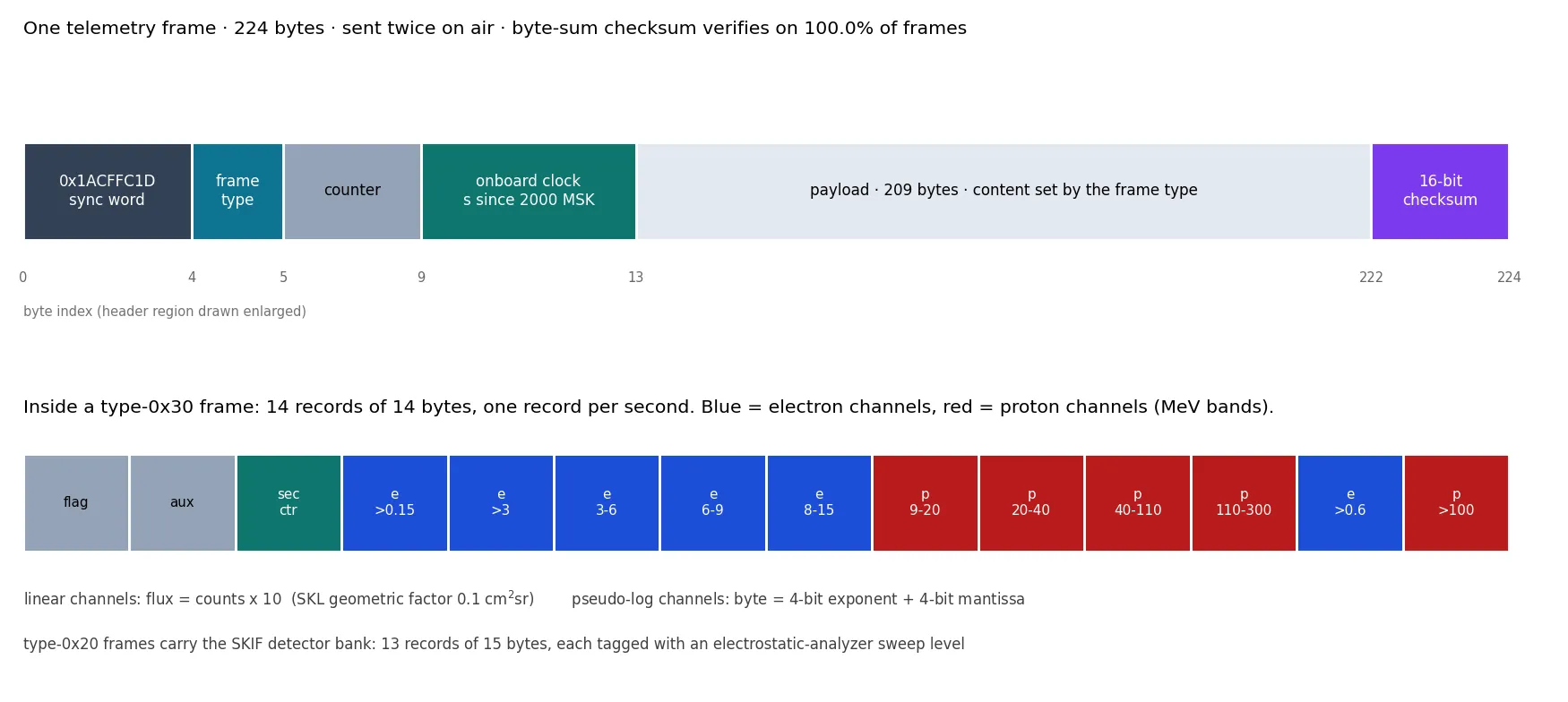
- Locked the frames, found the built-in checksum (verifies on 100% of frames), and read the onboard clock, which proved the byte layout was right.
- Mapped each byte to an electron or proton energy band and its encoding.
- Checked the result against Moscow State University's published readings for the same satellite.
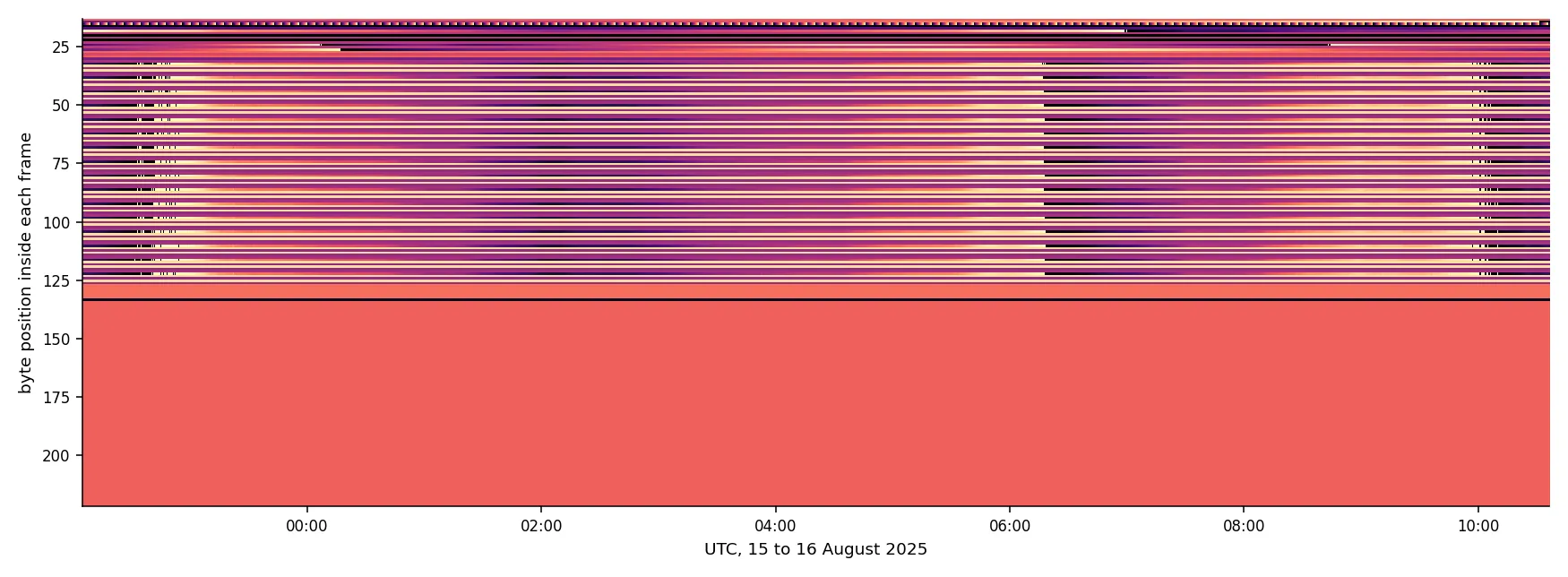
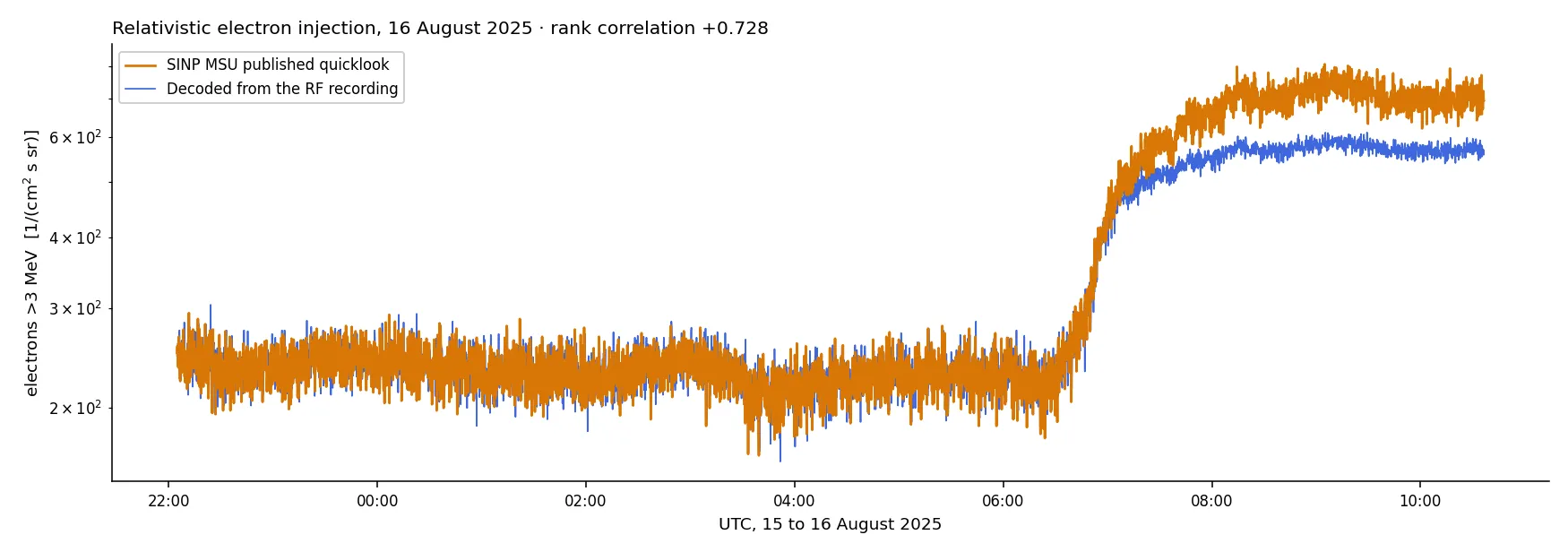
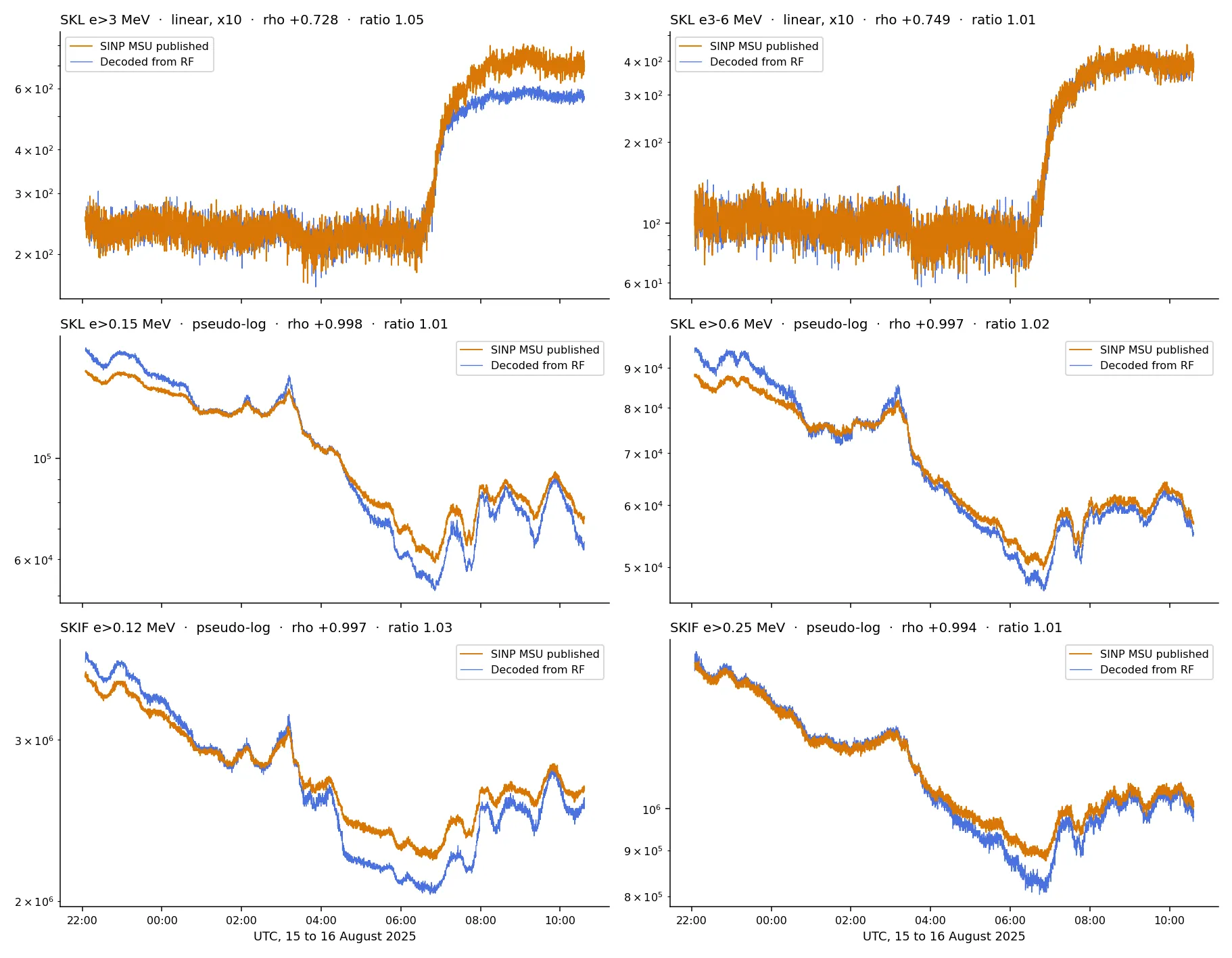
The frame anatomy, if you want the bytes
Where it stands
L2 is done and validated. The sibling satellite Elektro-L5 uses the same band, and we now decode it too, off our own dish: the first frames we have both received and read ourselves. That work has its own page.
Recording (L2): Aweeri, shared with the community. Reference: SINP, Moscow State University. Frames: SatDump. Byte-level decode, validation, and the L5 capture: this project.